We'll Tell You If It Isn't the Right Fit
The guided documentation path for a Level 2 CUI enclave only works on an environment that exists. Here's who it fits, who it doesn't, and exactly where everyone else should go instead.
Every part of this series has ended with the same sentence about the guided documentation path:
Before you buy, we confirm this fits your environment. If it doesn't, we'll tell you and point you at the right path. Nobody should end up with documentation describing an environment they haven't built yet.
It's the one sentence on the page that costs us something to say. It means turning some buyers away, or at least turning them around. We say it anyway, because a Level 2 self-assessment ends with someone at your company signing an affirmation, and that signature deserves documentation that's true.
This final part of The Enclave Build explains what that sentence means in practice: why fit matters so much for the guided tier, who it fits, who it doesn't, and what we tell the people it doesn't fit yet.
Why the Guided Tier Only Works on an Environment That Exists
The guided documentation path is built on one idea: your answers become your documentation. You answer structured questions about how your enclave is actually configured (your settings, your devices, your roles, your procedures), and those answers are the source of record for your System Security Plan (SSP) and the rest of the documentation set.
That only works if there's something real to describe. You can't accurately answer a question about a setting you haven't made, a device you haven't bought, or a procedure nobody follows yet. Answers about an environment that doesn't exist produce documentation that describes intentions, not reality. A Level 2 affirmation is a statement about reality.
That's the whole reason for the fit check. It isn't a sales filter. It protects the thing the guided tier is built to produce: documentation that matches what you actually built, reviewed by us, and signed by you.
Why We'd Rather Lose the Sale Than Sell the Wrong Thing
It's fair to ask why a company selling a product would tell some buyers not to buy it. The answer is the affirmation.
As we covered earlier in this series, the third-party assessor left the picture in July, but the affirmation didn't. A named senior official at your company still signs a statement about your security posture, and the documentation behind that statement is what gives it weight. If we sold the guided tier to a company with nothing configured yet, we'd be helping produce documentation that describes an environment that doesn't exist. That isn't a shortcut. It's a problem waiting for a signature.
There's a practical reason, too. The guided tier's review sessions are where a consultant checks every document against what you built. With nothing built, there's nothing to check against, and the review, one of the three roles that makes the tier trustworthy, has no job to do. So we confirm fit first. It's better for you, and it's the only way the product works the way we describe it.
Who the Guided Tier Fits
In practice, the guided tier is the right fit when all of these are true:
✅ A self-assessment program
Your contract calls for a Level 2 self-assessment, not a certification by a certified third-party assessor organization (C3PAO).
✅ Limited CUI needs
Your Controlled Unclassified Information (CUI) lives in a small part of the business, so a dedicated enclave makes sense. That's the design from Part 1.
✅ Someone who can follow the guides
You have an IT Point Person, often someone doing IT as a second job, who can work through the configuration guides with our consulting support.
✅ An enclave that's configured, or being configured
Your enclave on Microsoft 365 GCC High or Google Workspace exists, or is actively being built from the guides, so there's a real environment to describe.
One more thing sits underneath all four: a Level 1 foundation. Level 2 always sits on top of Level 1, and your everyday workplace still handles Federal Contract Information (FCI) under the 15 Level 1 practices.
The composite company from Part 5 is a good example of a fit: a self-assessment requirement, two people who handle CUI, an operations manager who could follow the guides, and an enclave being configured. The same company a few months earlier, before anyone had decided where the CUI would live, would have been told to configure first.
For clients who fit, the payoff is real:
In most cases, clients on the guided path complete their Level 2 enclave self-assessment in about 30 days, from kickoff to a signed affirmation.
Your timeline will vary with your existing infrastructure, how fast configuration gets done, and how quickly questions get answered.
Our Analysis — not a commitment.
⚠️ Self-Assessment Programs Only. The L2 CUI Enclave Package is scoped for CMMC Level 2 programs eligible for annual self-assessment. Programs required to use a C3PAO are not in scope.
Who It Doesn't Fit Yet, and Where to Go Instead
Not fitting isn't a dead end. In almost every case, it's a matter of order. Here's what we tell people in each situation.
Your enclave isn't built yet → configure first, then guided
This is a common situation, and it has a clear path. Start with the configuration: the L2 CUI Enclave Package's guides for Microsoft 365 GCC High or Google Workspace, your dedicated CUI-only devices, and your accounts, with time estimates on every task and our consulting support along the way. Once the enclave exists, you move to the guided documentation path, and your answers describe something real.
The order matters more than the speed. Building first and documenting second is how you end up with documentation you can sign with confidence. If you're still deciding whether to build, Part 5 walks through the whole build, phase by phase.
What "configure first" looks like in practice
- Order the dedicated CUI-only devices and set up the enclave workspace on your chosen platform.
- Work through the configuration guides, using the time estimates to plan the IT Point Person's hours.
- Create accounts for only the people who need CUI, and settle the "front door" for how CUI arrives.
- Come back to the guided intake when the settings exist to describe. That's usually the moment the drafting would otherwise stall.
Your program requires a C3PAO → outside what our packages cover
Our Level 2 packages are built for self-assessment programs. If your contract requires a certification assessment by a C3PAO, our L2 packages aren't the right tool, and we'll say so on the call rather than sell you something that doesn't match your obligation. Your contract, not us, determines which applies.
You'd rather write it all yourself → the standard package, or the book
Some owners want to do the drafting themselves, and that's a perfectly good choice. The L2 CUI Enclave Package gives you the same 110 practices, the same 182 artifacts, and consulting sessions to work through them template by template. If you want to go fully on your own, Volume 2 of my CMMC Practical Guides covers the same Level 2 practices and documentation, written for exactly that reader. Same finish line, more time in a text editor.
You don't handle CUI and have no plans to → a strong Level 1 first
If CUI isn't part of your work and isn't on your horizon, put your effort into a solid Level 1 program and revisit Level 2 when the opportunity is real. When it is, Part 2 covers how to get ready before the contract.
CUI runs through most of your business → an enclave may be the wrong design
If most of your staff handle CUI every day, a small enclave stops making sense, and that's a different conversation. We'll tell you that plainly too.
Not sure which of these describes you?
That's exactly what the free 30-minute call is for. Bring your subcontract and a rough picture of how CUI reaches you. You'll leave knowing whether the guided tier fits, and if it doesn't yet, what to do first.
Book a Free 30-Minute Fit Call →A Five-Question Self-Check Before the Call
You can get most of the way to your own answer before we talk. Be honest with each one:
- Does my contract call for a self-assessment or a C3PAO certification? If it's a C3PAO, our Level 2 packages aren't the right fit.
- Can I point to where my CUI lives, and who touches it? If the answer is "a few people, one or two contracts," an enclave probably fits. If it's "everyone, everywhere," it may not.
- Has configuration started? If the enclave exists or is being built, guided may fit now. If nothing is set up yet, the path is configure first.
- Who will follow the configuration guides? Name the person, and the few hours a week they can protect.
- Do I want to write the documentation myself? If yes, the standard package or Volume 2 may suit you better, and that's a fine answer.
Bring your answers to the call. They turn a 30-minute conversation into a decision.
Standard or Guided: Same Finish Line
Both tiers end in the same place: a packaged, date-stamped Level 2 self-assessment of your enclave, signed by you. The difference is who holds the pen for the first draft.
| L2 CUI Enclave Package | L2 CUI Enclave — Guided Documentation | |
|---|---|---|
| Best for | Owners who want to draft the documentation themselves, with consulting help | Owners who want the drafting off their desk, with an enclave configured or being configured |
| Practices / artifacts | 110 / 182 | 110 / 182 |
| First draft | You, template by template | From your answers to structured questions |
| Who signs | You | You |
| Price | $3,495/year | $5,495/year |
And for the guided tier, the boundary is fixed. The tool runs outside your CUI boundary. No connection to your tenant, no access to your systems, and it never touches CUI. Its only inputs are your answers about how your environment is set up. It produces documentation about the enclave. It never operates inside it.
What Happens on the 30-Minute Call
No slide deck and no pressure. In 30 minutes, we cover four things:
- Your obligation. What your contract and your prime's flow-downs actually require. Bring the subcontract if you can.
- Your boundary. How CUI reaches you today, who actually needs it, and how small your enclave can be.
- Your platform. Microsoft 365 GCC High or Google Workspace, based on your primes and your team.
- Your fit. We walk through what the guided intake asks, then give you a straight answer: the guided tier, the standard package first, or something else entirely.
If the answer is "configure first, then guided," you'll leave knowing exactly what configuring first involves. If the answer is "not us," you'll hear that on the call, too.
The Enclave Build, in Six Parts
- Part 1: Your Whole Office Doesn't Need to Be Level 2. Level 1 follows the company; Level 2 follows the CUI. Build a small enclave for it.
- Part 2: Ready Before the Contract. No CUI yet? The same design gets a Level 1 company ready to compete for CUI work.
- Part 3: The Self-Assessment Path Is Open. Finishing Is the Hard Part. Level 2 stalls on the documentation, not the technology.
- Part 4: Same Practices, Same Artifacts, Same Signature. The guided documentation tier, explained in full.
- Part 5: Building a Level 2 CUI Enclave, Start to Signature. Ten phases, role by role, to a signed affirmation.
- Part 6: We'll Tell You If It Isn't the Right Fit. You're reading it.
📘 Prefer to do it yourself?
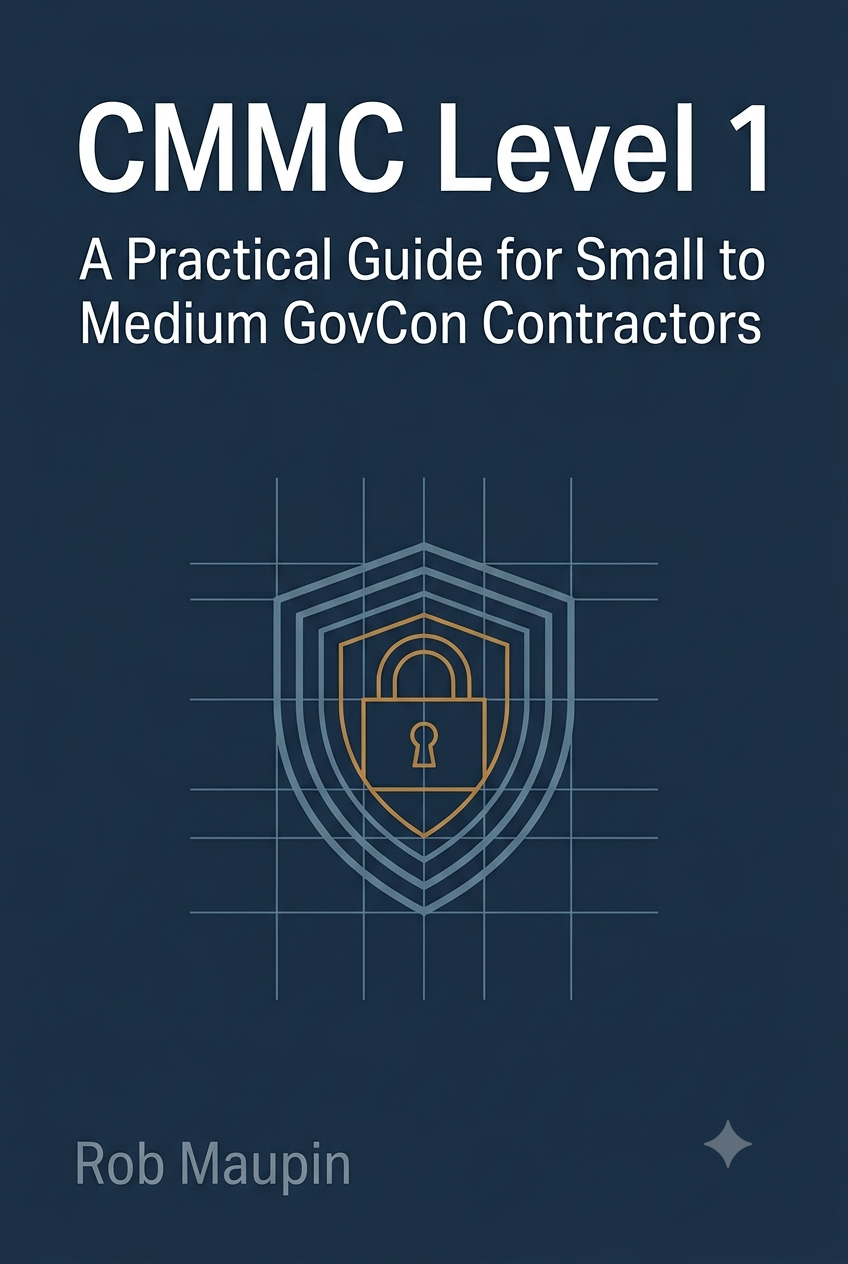
Volume 1: CMMC Level 1: the Level 1 foundation every enclave sits beside.
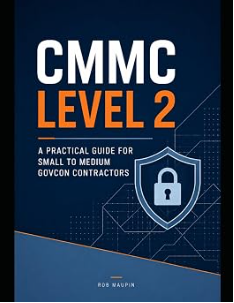
Volume 2: CMMC Level 2: the Level 2 practices and documentation, for the contractor writing it on their own.
Kindle from $12.99. See the full series →
The Bottom Line
The guided tier is the fastest honest route to a signed Level 2 enclave, for the right company at the right moment. If that's you, the drafting comes off your desk and, in most cases, you're done in about 30 days. If it isn't you yet, we'll tell you what to do first. Either way, you'll know after one call. You configure the enclave. We guide the build.
⚠️ Self-Assessment Programs Only. The L2 CUI Enclave Package is scoped for CMMC Level 2 programs eligible for annual self-assessment. Programs required to use a C3PAO are not in scope.
Ready to see the questions?
A free 30-minute consultation walks you through the intake, your platform choice, and whether the guided tier is the right fit for your CUI footprint.
Schedule Your Free 30 Minutes →Sources & Further Reading
- 32 CFR 170.16: CMMC Level 2 Self-Assessment and Affirmation Requirements
- 32 CFR 170.19: CMMC Scoping
- DFARS 252.204-7012: Safeguarding Covered Defense Information and Cyber Incident Reporting
- NIST SP 800-171 Rev. 2
- DoD CIO: About CMMC
This article is general information, not legal advice. Whether your contracts require a Level 2 self-assessment, and whether information you hold is CUI, is determined by your contract and your contracting officer or prime. Questions of contract interpretation should go to your attorney.